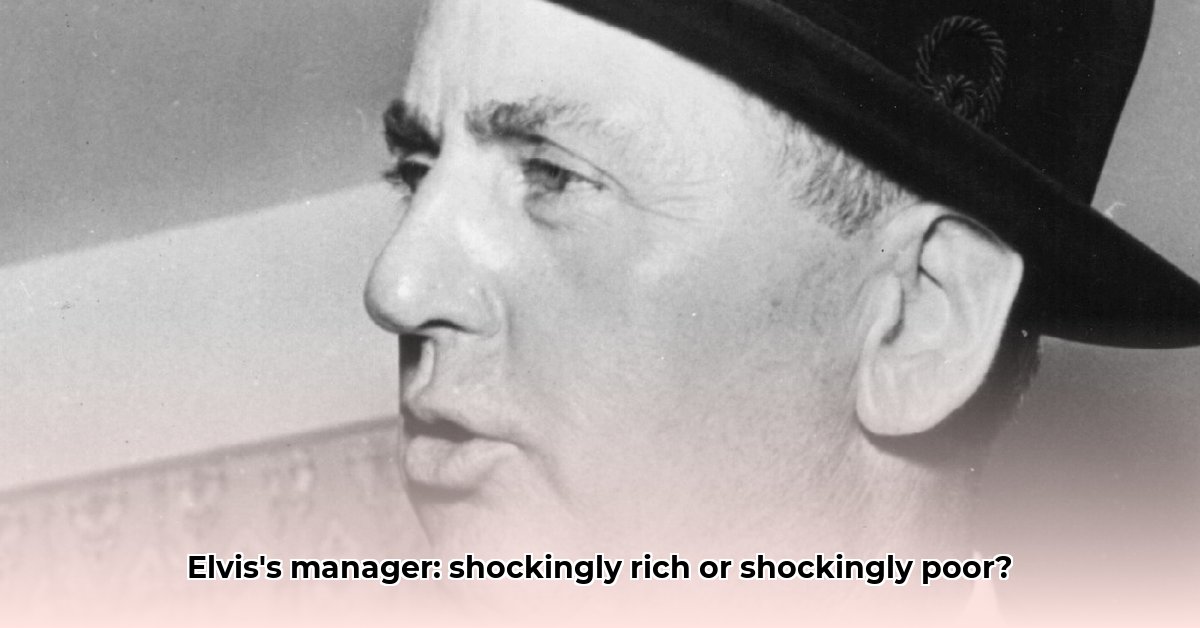
Colonel Tom Parker. The name is inextricably linked with Elvis Presley's, a testament to Parker's role as the King's manager and architect of his career. Yet, behind the carefully cultivated image of a shrewd businessman lies a far more complex narrative: a tale of immense wealth, audacious gambles, and ethically questionable dealings. This isn't just a biography; it's an investigative journey into the numbers – Parker's net worth, his ruthless business tactics, and the potential financial cost to Elvis himself. We will explore the high-stakes maneuvers that propelled Parker to riches while simultaneously jeopardizing Elvis's fortune. This is a story of both triumph and devastating failure, brilliant strategy and catastrophic blunders, providing a fascinating glimpse into the music industry and the precarious balance between artist and manager.
Colonel Tom Parker's Financial Empire: A Closer Look
Colonel Tom Parker's estimated net worth at the peak of his career reached a staggering $100 million—a figure that dwarfs even today's adjusted values. This wasn't accidental; it was the calculated outcome of a cunning, albeit ethically dubious, business model. Parker consistently demanded exorbitant commissions – ranging from 25% to an astonishing 50% of Elvis's earnings. Significantly exceeding the industry standard of 10-25%, this practice alone generated colossal personal profits for Parker.
His influence extended far beyond mere commissions. Parker masterminded every aspect of Elvis's career, negotiating lucrative album deals, securing starring roles in high-budget films, and building a lucrative merchandising empire. Even after Elvis's death, Parker continued to profit generously from his control over Factors Etc., the company responsible for managing a substantial portion of Elvis's post-mortem merchandise sales. His financial acumen was undeniable; however, the methods he employed to achieve this success raise serious ethical questions.
The Dark Side of Success: Lawsuits, Gambling, and Unanswered Questions
Parker's journey to unimaginable wealth wasn't without its turbulence. His path was marked by protracted legal battles, dubious practices, and a lavish lifestyle that often exceeded his legitimate income. The Elvis Presley estate famously sued Parker and RCA, alleging fraud, conspiracy, and misrepresentation of Elvis's financial interests. While Parker eventually settled, walking away with a substantial sum, the lawsuit revealed a potentially systemic pattern of unethical conduct. It was far more than a simple misunderstanding; it highlighted a pattern of behavior ripe with potential illegality.
Adding to the complexities of his financial picture, Parker harbored a well-documented gambling addiction, reportedly squandering millions in Las Vegas casinos. This habit undoubtedly created a substantial financial drain, reminding us that even those at the apex of success are vulnerable to personal failings. The scale of his losses suggests a serious addiction with potentially devastating consequences for his overall net worth.
The Unseen Costs: Hidden Secrets, Missed Opportunities, and a Legacy of Regret
One of the most compelling, and financially significant, aspects of Parker's career was his long-held secret: illegal immigration status. The constant threat of deportation profoundly impacted his decisions, particularly regarding international touring. This fear prevented Elvis from performing internationally, a missed opportunity that likely cost both Elvis and Parker millions, perhaps billions, in potential revenue. The magnitude of this lost income is truly staggering.
Further adding to the enigma surrounding Parker, unsubstantiated rumors of a possible unsolved murder in his native Netherlands persist. While unconfirmed, these rumors add another layer to his mysterious persona and raise questions about whether his personal secrets influenced his business decisions.
Deconstructing the Colonel's Fortune: A Quantitative Analysis
To fully grasp the factors that contributed to Parker's considerable wealth, let’s analyze the key elements shaping his financial legacy:
| Factor | Positive Impact? | Negative Impact? | Magnitude |
|---|---|---|---|
| Extremely High Commission Rates | Yes | Yes | Extremely High (primary driver of wealth) |
| Post-Elvis Merchandise Revenue | Yes | No | Significant |
| Legal Settlements & Battles | No | Yes | Moderate (reduced net worth) |
| Extensive Gambling Losses | No | Yes | Extremely High (substantial wealth erosion) |
| Missed International Tours | No | Yes | Potentially Massive (unrealized potential) |
Beyond the Numbers: A Legacy of Ethical Ambiguity
The story of Colonel Tom Parker's net worth transcends simple financial calculations. It serves as a cautionary tale about the inherent ethical complexities of the music industry, the responsibilities of those managing significant wealth, and the potential consequences of prioritizing personal gain over the well-being of those you represent. While his financial achievements were undeniable, they came at a significant ethical cost. His legacy remains a complex blend of triumph and moral compromise; a potent reminder that accumulating wealth doesn't always equate to a successful, or ethical, life. The lingering question remains: at what cost was this considerable fortune achieved?
How Did Colonel Tom Parker's Illegal Immigration Status Impact Elvis Presley's Career?
Key Takeaways:
- Colonel Tom Parker's illegal immigration status severely curtailed Elvis Presley's international career prospects.
- Fear of deportation drove Parker's decision to confine Elvis primarily to the United States.
- The resulting loss of potential revenue from international tours was substantial.
- Parker's secretive nature likely extended beyond immigration, influencing his overall management style.
- The full extent of his strategic choices and their effect on Elvis's career requires further investigation.
Parker's illegal residency in the United States acted as an insurmountable barrier preventing Elvis from capitalizing on lucrative international touring opportunities. The lost revenue from untapped markets in Europe and Asia represents a colossal missed opportunity, potentially transforming Elvis's considerable wealth into an unimaginable fortune. This self-imposed limitation, born from Parker's own legal precariousness, fundamentally altered Elvis's global impact.
The secrecy surrounding Parker's immigration status reflects a larger pattern of control and concealed information that characterized his management style. It raises serious questions about the extent to which his actions were motivated by self-preservation rather than Elvis's best interests. The complete impact of Parker's actions and their implications still require thorough historical scrutiny.